
![[personal profile]](https://www.dreamwidth.org/img/silk/identity/user.png)


Entry tags:
application for ![[community profile]](https://www.dreamwidth.org/img/silk/identity/community.png) exsilium
exsilium
» CHARACTER INFORMATION
Character NAME: Major Richard Sharpe, previously of the 95th Rifles, now of The Prince of Wales’s Own.
Canon & MEDIUM: Sharpe, the TV series, with add-ons from the novels.
Canon PULL-POINT: After Sharpe’s Justice, before he reached London.
Character AGE: 37.
Character ABILITIES: He can reload and shoot his rifle three times a minute, lead a garrison and make them to like him despite not being an ‘officer and gentleman’, charm the pants off any woman he meets, and fight with a very heavy cavalry sword. In fact, he practically doesn’t lose fights ever in his canon, mostly because he tends to fight officers and they believe in something called ‘fighting fair’ and Sharpe is a dirty little cheating bastard. Basically, Sharpe believes in winning, and he usually wins.
Character HISTORY: You know the advice that people give to fanfic writers? That your new character shouldn’t barge into every single canonical event and make it all about them? Tell that to Bernard Cornwell. To talk about Sharpe’s history is to tell of the British’s military history in India and the Napoleonic Wars. Sharpe is directly -- or indirectly -- responsible for every single British military victory in both conflicts. I am not even kidding.
Please look at this link. It is immensely comprehensive, especially since every single episode has its own Wikipedia page and accompanying episode summary. I’ll just be repeating whatever that is there, honestly.
Also, despite Sharpe being taken from Justice, I’ll be incorporating details from Challenge as well for the simple fact that it shows Sharpe in India and references his role Seringapatum. (Although, unlike the novels, he didn’t kill the Tippoo Sultan and stolen all of his money. Because if he did, he would have been promoted to Ensign at Assaye, instead of to Lieutenant in Spain as it happened in the TV series.)
Character PERSONALITY:
SHARPE THE MAN
“My mother was a whore, I was born in a brothel, grew up in an orphanage and hope to die in the army.”
The most important thing anyone needs to know about Richard Sharpe is that he is a working-class man. He was promoted from the ranks from a Sergeant to a Lieutenant because he saved Arthur Wellesley -- before he became the Duke of Wellington (yes, that Duke of Wellington), but when he was still the commander of the English forces -- from three French cavalry. With a single rifle shot. This is a big deal, because the differences between the classes is something deeply embedded in the culture of the English during the late 1700s and early 1800s. Officers in the army, “proper officers” in Patrick Harper’s words, are gentlemen -- that is, they are either sons of nobility or of rich merchants, rich enough to buy their own uniforms, swords, and horses.
Richard Sharpe doesn’t own an officer’s uniform, his sword comes from a dead Major (and is constantly referred to as a butcher’s blade), and he marches on his feet instead of riding a horse. For most of the series, he doesn’t have any money. Richard Sharpe learned to read while in India while in his mid-twenties, taught by a man called Lawford from a single page of the Bible. He’s different in the army, considered an upstart by the officers and someone unnatural by the men. And he somehow ended up being a Lieutenant Colonel by the time of Waterloo.
Not bad for a son of a whore, eh?
But it’s not always smooth sailing. In his own words:
“Me? I changed me class, rose in the ranks. I can walk into the officers’ mess, but I don’t expect ‘em to be happy ‘bout it. I don’t expect a round of applause. Same goes for my time with the lads. I can sit and drink tea, but I’m not one of ‘em anymore. You made your bed, Maquerre, then you lie in it, without complaining.”
Sharpe marches to the beat of his own drum because of his background. There’s no precedent for someone like him. The most direct manifestation of in his honour. A ranking soldier (i.e. Sergeants and below) has no such thing as honour because they are all working-class people; an officer usually follows the strict, upper-class honour code and its associated behaviour. Sharpe is the same person who travelled nearly half of Spain to find a woman to clear his name, and who shot an officer who challenged him to a duel on the ass because he thinks he’s an idiot. He doesn’t follow either.
Sharpe’s honour is very simple: admit to what you are and what you do, and nothing else. He’s a thief and a murderer (he’s in the army because he’s escaping punishment for his second murder, actually) and he admits to both pretty much openly. But accuse him of something he didn’t do, and he’ll move hell and high water to deny it.
In Sharpe’s Honour, his enemy Major Ducos set him up by accusing him of murdering a woman’s husband. The woman is La Marquesa, and he has never met her. He went to find La Marquesa, and brought her back to the camp in order to deny that he had ever slept with her, and pinpointed Ducos and his accomplices to be the real murderers of her husband. He did that not only because he would have been hung if he didn’t clear his name, but he has to reclaim his honour. He might be a murderer, but he didn’t murder that specific man and he refuses to be blamed for something he didn’t do.
This has roots in the fact that he was flogged two hundred lashes when he was a Private because he was provoked by his enemy Hakeswill into striking him. Hakeswill was an officer, and the “proper officers” all like Hakeswill because he’s a kiss-arse, so Sharpe was sentenced to two thousand lashes. It stopped at two hundred by the efforts of Wellesley (the novel Sharpe’s Tiger, mentioned in the episode Sharpe’s Company). Sharpe hates being accused of something he didn’t do or something he wasn’t beyond all things.
The thing is, Sharpe’s honour frequently clashes with the officers’ idea of honour. In Sharpe’s Battle, he jeopardised the possibility of his promotions when he murdered two officers who were raping Spanish women. Those officers were under the protection of the French, under the rules of honour named parlay (summarised as “I am an officer, and I demand the treatment due to my rank”). Sharpe completely violates parlay and offended the French officer in charged named Loup, who asked him to not kill the officers. He knows the rules, knows the consequences, and he did it anyway because Sharpe always marched to the sound of his own drum. He basically does what he wants and screws everyone else. He violates parlay when, just two episodes before, he used parlay for his own means.
He plays fast and loose with morals as well. Like I said, Sharpe is a thief. He borrowed a bunch of picklocks from his subordinate Cooper in Rifles to open a chest he promised not to open because he’s damn curious about what’s inside (what’s this about honouring the giving of your word, Sharpe has never heard of it). Sometimes he keeps his promises, though (Eagle), even when it requires him to do stupid, reckless things. He cheats on his first wife. If his second wife wasn’t with him all the time, he would’ve cheated on her as well. He regularly breaks Wellesley’s rules about no duelling while in the army (Eagle, Honour, Justice...).
It really gives rise to the question how he was even promoted to Lieutenant Colonel, doesn’t it?
SHARPE THE SOLDIER
"Sharpe's a killer. Killed three French cavalrymen and saved Wellesley's life. Three seconds, slash, cut, thrust. And that's while he was still a Sergeant."
Sharpe is a hell of a good soldier. The basic premise of each episode is this: something happens, Wellesley sends Sharpe to deal with it, Sharpe deals with it by his own means and wins, comes back and reports to Wellesley. Insert a few romantic subplots here and there (which I will deal with later), a bunch of enemies who hate Sharpe personally, and you have the formula for a Sharpe episode. In Sharpe’s Trafalgar, Horatio Nelson (yes, that Nelson) says that Sharpe’s future regiment of Riflemen, the 95th Rifles, are a group of “intelligent men”, and Sharpe is definitely one of the best examples.
Sharpe is very, well, sharp. That’s one of the reasons why he gets away with all that he does. He’s not educated and he doesn’t know much about literature (it was his subordinate, Rifleman Harris, who figured out the necessary code in Sharpe’s Sword), but one thing he knows is how to win. Helped by a liberal dose of protagonist magic, Sharpe and his best friend/Sergeant Patrick Harper went back to England to figure out what happened to their missing regiment (Sharpe’s Regiment, the episode names aren’t very creative honestly), and Sharpe figured it out within fifteen minutes of the episode while in England that the regiment was being sold to other companies because of an old enemy of his. The above quote to Maquerre basically shows how easily Sharpe can strip someone apart just by looking at them.
Also, for a man who was illiterate until his mid-twenties, by the time Sharpe’s Enemy came along, he can speak and read English, French and Spanish. He reads Voltaire for fun. Learning the languages come easily when he keeps falling in love with women who speak those languages.
He also keeps winning, aside from the fact that he’s the protagonist, because he has balls of steel. You kind of have to if you fought in the Napoleonic Wars. In a regular battle, you can’t see the enemy because of all the smoke from the gunpowder from the muskets, rifles and cannons, and you can only hear them getting closer and closer from the sound of French drums and their constant chant (“Vive l’empereur! Vive l’empereur!”). You can’t really aim properly because you can’t see, and the only way to win a battle is to stand and reload three times a minute (that’s Sharpe’s personal mantra for all his soldiers.) He has enough balls of steel to volunteer to lead the Forlorn Hope (Company). That’s pretty much a death wish, because the Forlorn Hope is basically the first people over the wall. They are sitting ducks for the defenders to shoot at, blow cannons at, throw off ladders, and stab their bayonets into. Most Forlorn Hopes are dead men, but Sharpe volunteered.
Because he wants a promotion to a Captain. That’s partly how he was promoted so fast as well -- Sharpe is hell of ambitious. In Sharpe’s Triumph, it’s mentioned that most officers promoted from the ranks turn out to be drunkards because they can’t fit in, but Sharpe exceeded expectations entirely. But he also wants to be promoted. He likes commanding his own regiment; likes doing things he way and not letting the other officers get into his way, and he’s going to do all he can to achieve it. By Mission he’s pretty much gotten sick of war and he’s happy to stay a Major -- before Waterloo, he was living in Normandy in a farm.
Sharpe has a hell lot of ambition and he is a great soldier, but honestly, by the time of Justice where I’m taking him from, he’s tired of all of it.
SHARPE THE LOVER
You can’t really talk about Richard Sharpe without talking about his women. There’s one every novel/episode. There are three women who have actual relationships with him: Teresa Moreno, a Spanish guerrilla who taught him Spanish and French and how to lead (Rifles, Eagle, Company, Enemy), Jane Gibbons, his enemy Henry Simmerson’s niece, (Regiment, Siege, Mission, Revenge, Justice, Waterloo), and Lucille Castineau (Revenge, Justice, Waterloo). In the middle, he sleeps with a lot of women: Lady Farthingdale (Enemy), La Marquesa (Honour), and Lady Anne Camoynes (Regiment). I’m missing a few and all of those from the novels. I’m not kidding that there’s one in every novel/episode, sometimes two.
He’s kind of like James Bond of the Napoleonic Wars. Except if you ask Sharpe to be a spy he’ll be blowing up a castle while trying to get information. So exactly like James Bond then. In any case...
Sharpe’s major flaw is that he has no judgment whatsoever when it came to women. He falls in love easily, charms women easily, sleeps with them easily, and it’s more protagonist power that he hasn’t sired a whole series of bastards and picked up a series of venereal diseases. To date, he’s had three actual relationships with women: Teresa Moreno, the Spanish guerrilla who taught him how to be a leader; Jane Gibbons, who was actually the only woman constantly mentioned to be “Mrs. Sharpe”; Lucille Castineau, a French widow whom he settled down with by Justice. In between, he also had bedroom adventures with: Lady Farthingdale (Enemy), Lady Anne (Regiment), La Marquesa (Honour), and a few more who made moon eyes at him and whom he made moon eyes back and didn’t sleep with. I’m not even beginning to start on the list in the novels, because that would take me forever.
Sharpe basically believes three things about women unless proven wrong: they are helpless, they are in need of protection, and they are incapable of being immoral. When it comes to women he actually holds affection for, there’s a fourth caveat: they can basically do nothing wrong unless they screw him over really, really badly.
Let’s look at Jane Gibbons. She’s the niece of one of Sharpe’s enemies, Sir Henry Simmerson, and the sister of a man Sharpe killed. When Sharpe met her, she was being forced into marriage with an ugly, immoral man. Jane Gibbons also happens to be extremely beautiful. So Sharpe falls head over heels with her despite the fact that she’s above him in class and she always wants to be a socialite. She nearly falls for a newspaper reporter who pretends to be a poet by plagiarising poetry and misquoting Hamlet while married to Sharpe, and Sharpe forgives her. He even writes her a piece of paper that gives her all of his savings, which was a sum of ten thousand guineas (that’s like, nearly a million dollars now).
Jane takes the paper, runs away to London, takes out all the money, spends all of it, and cheats on him with a man named Rossendale. All of this happens while Sharpe was expecting a court martial. He knows she took the paper, but he thought she would be worried about him and he sent his Sergeant Patrick Harper to get word to her of Sharpe’s safety and innocence, and to protect her. Jane ran away from him. Did I mention the ‘revenge’ of Sharpe’s Revenge is his revenge and later Justice against Jane?
Yeah. That was a brilliant marriage. And he’s still married to her! Because Jane spent all of his money, neither of them can now afford a divorce.
Another example of Sharpe’s rampant idiocy with regards to women is his relationship with Lady Farthingdale. He knows her as a whore who was his lover in his youth before she managed to fool a Lord into marrying her (I’m not being disparaging: this is exactly her story, and she’s kind of really freaking awesome). Sharpe rescues her. What does he do next? He sleeps with her. It’s not that Lady Farthingdale isn’t awesome, because she is. It is that Sharpe did that while his wife Teresa and his daughter Antonia were trapped behind enemy lines, with the former doing spy-work for Hogan. This incident proceed to haunt him horribly because Teresa died that very episode. Brilliant, Sharpe. Absolutely brilliant.
I take it all back what I said before that he’s intelligent. He has cock-related intelligence issues.
» EXSILIUM INFORMATION
Chosen WEAPON: Sharpe’s Baker rifle (he can load it three times a minute, and it’s powerful, don’t shit it). As it evolves, I… kind of want him to basically have unlimited ammo, starting off with his ammo bag not emptying (he takes pride in his ability to reload three times a minute - I’m going to stop repeating that phrase now) and eventually to Sharpe not having to reload his rifle at all.
Character INVENTORY: His green Rifles uniform, his shako, his heavy military coat, his ammo bag with balls and powder, a bit of money (no more than a few pounds -- pounds as in, early 19th century pounds), the golden telescope Arthur Wellesley gifted him, and of course, his cavalry sword, his rifle, and his pistol.
» PREVIOUS GAME INFORMATION ( IF APPLICABLE ) n/a
» SAMPLES
First PERSON:
voice;
Money in cards and saying me rifle’s been changed.
[ Except that’s not actually how he says it, it’s more like: munneh in cards and sayin’ me rifle’s been changed. Sheffield, Yorkshire haunts the streets of Exsilium now, thanks to one Richard Sharpe. ]
The only cards I know of are those given by weasely merchants looking to fleece more money out of you. But you ain’t asking for money, are you? You’re asking me to fight with me blood and sweat, and you ain’t even decent enough to give me a half-ration of brandy, or even the King’s shilling.
[ Thud. The sound of rifle on stone ground. There’s a soft shuffling sound and tapping of fingers on the screen of the tablet. The video switches on. ]
video;
Me name’s Richard Sharpe. [ Blond hair, green eyes, a scar on his upper left cheek. His lips are twisted into a scowl, and at the edge of the screen, you can see the edge of his Rifleman’s jacket. Have a picture. ]
If yer name's Patrick Harper, I suggest you get yer arse over here before I shoot it off you.
Third PERSON:
The road in front of him was long and quiet, with nothing else but his own thoughts to occupy him. Sharpe left Hagman behind in Yorkshire, and though he was glad to have left the town where he was born, he wasn’t glad to leave behind one of the Chosen Men. But Hagman had found a woman he liked. Sally’s a decent woman and they would take good care of each other. Sharpe was headed back to London then Normandy himself, back to Lucille whom he had left on the farm with barely any servants to help her in her work.
He had left Patrick behind as well, but that was a wound that needed more miles before he could prod at it, to find its shape and let it be bled clean.
Sharpe nudged the horse beneath him into a canter. Annoying animals, but he took it because it was a gift from Stanwyck and he would be a fool if he chose to walk to London instead of taking a horse. He wouldn’t be able to buy a horse now if he wanted to, and Sharpe laughed at the thought. He should have killed Rossendale; should have shot him in the head. He should have listened to Lady Anne and not have married Jane. But Jane was so beautiful when he first saw her, and her eyes were red-rimmed when he promised. She needed him- no, she needed a marriage. Perhaps she would have been happier married to that other man -- Sharpe had forgotten his name -- for then she would have been a Lady with all the pretty dresses Sharpe could not afford, going to balls that Sharpe had no interest in, and making small talk about poetry and philosophy that Sharpe didn’t know.
He was a soldier and only that. His hands were callused, new scars from guns and swords laid over the older ones made by the thousands of knots he had to tied in the foundling workhouse. Sharpe had no idea who William Wordsworth was. But he knew how to draw water from a well; how to repair a roof; how to wield a trowel and an axe. Lucille’s farm was a far better place for him, though her neighbours would never stop looking at him strange because he was an Englishman and he was one of those who had murdered their sons, husbands, brothers, uncles, fathers, and friends.
In front of him, an inn loomed. Sharpe turned his head and sniffed under his arm. He did not smell too rank yet, but he suspected that the horse needed to rest anyhow. His hands fumbled slightly at the reins as he urged the horse to turn.
Boney was quiet now, Sharpe thought. He was quiet and England was loud, all the soldiers come back home to a nation who would have rather they all died instead of come back, clamouring for jobs and food and half-pay. If Sharpe believed in God -- if he had before, Teresa’s death had erased any and all belief that remained -- he would send a prayer for Hagman that he would find a job to feed himself and Sally, and any little ones they might have. But Sharpe believed in no such God, and he only urged his horse forward, smiling bitterly.
There was a ship headed for France in a week. He had to reach London by then.
» ADDITIONAL NOTES
If a character is played by a British actor over 40, chances are they might have had a cameo in Sharpe. I’m talking about Daniel Craig (Lieutenant Berry), Mark Strong (Colonel Brand), Alice Krieg (La Marquesa), Liz Hurley (Lady Farthingdale), Paul Bettany (The Prince of Orange), etc, etc, etc. Also, Sharpe is played by Sean Bean. Please just give me facetwins shenainegans, basically.
Character NAME: Major Richard Sharpe, previously of the 95th Rifles, now of The Prince of Wales’s Own.
Canon & MEDIUM: Sharpe, the TV series, with add-ons from the novels.
Canon PULL-POINT: After Sharpe’s Justice, before he reached London.
Character AGE: 37.
Character ABILITIES: He can reload and shoot his rifle three times a minute, lead a garrison and make them to like him despite not being an ‘officer and gentleman’, charm the pants off any woman he meets, and fight with a very heavy cavalry sword. In fact, he practically doesn’t lose fights ever in his canon, mostly because he tends to fight officers and they believe in something called ‘fighting fair’ and Sharpe is a dirty little cheating bastard. Basically, Sharpe believes in winning, and he usually wins.
Character HISTORY: You know the advice that people give to fanfic writers? That your new character shouldn’t barge into every single canonical event and make it all about them? Tell that to Bernard Cornwell. To talk about Sharpe’s history is to tell of the British’s military history in India and the Napoleonic Wars. Sharpe is directly -- or indirectly -- responsible for every single British military victory in both conflicts. I am not even kidding.
Please look at this link. It is immensely comprehensive, especially since every single episode has its own Wikipedia page and accompanying episode summary. I’ll just be repeating whatever that is there, honestly.
Also, despite Sharpe being taken from Justice, I’ll be incorporating details from Challenge as well for the simple fact that it shows Sharpe in India and references his role Seringapatum. (Although, unlike the novels, he didn’t kill the Tippoo Sultan and stolen all of his money. Because if he did, he would have been promoted to Ensign at Assaye, instead of to Lieutenant in Spain as it happened in the TV series.)
Character PERSONALITY:
SHARPE THE MAN
“My mother was a whore, I was born in a brothel, grew up in an orphanage and hope to die in the army.”
Richard Sharpe, Sharpe’s Rifles
The most important thing anyone needs to know about Richard Sharpe is that he is a working-class man. He was promoted from the ranks from a Sergeant to a Lieutenant because he saved Arthur Wellesley -- before he became the Duke of Wellington (yes, that Duke of Wellington), but when he was still the commander of the English forces -- from three French cavalry. With a single rifle shot. This is a big deal, because the differences between the classes is something deeply embedded in the culture of the English during the late 1700s and early 1800s. Officers in the army, “proper officers” in Patrick Harper’s words, are gentlemen -- that is, they are either sons of nobility or of rich merchants, rich enough to buy their own uniforms, swords, and horses.
Richard Sharpe doesn’t own an officer’s uniform, his sword comes from a dead Major (and is constantly referred to as a butcher’s blade), and he marches on his feet instead of riding a horse. For most of the series, he doesn’t have any money. Richard Sharpe learned to read while in India while in his mid-twenties, taught by a man called Lawford from a single page of the Bible. He’s different in the army, considered an upstart by the officers and someone unnatural by the men. And he somehow ended up being a Lieutenant Colonel by the time of Waterloo.
Not bad for a son of a whore, eh?
But it’s not always smooth sailing. In his own words:
“Me? I changed me class, rose in the ranks. I can walk into the officers’ mess, but I don’t expect ‘em to be happy ‘bout it. I don’t expect a round of applause. Same goes for my time with the lads. I can sit and drink tea, but I’m not one of ‘em anymore. You made your bed, Maquerre, then you lie in it, without complaining.”
Richard Sharpe, Sharpe’s Siege
Sharpe marches to the beat of his own drum because of his background. There’s no precedent for someone like him. The most direct manifestation of in his honour. A ranking soldier (i.e. Sergeants and below) has no such thing as honour because they are all working-class people; an officer usually follows the strict, upper-class honour code and its associated behaviour. Sharpe is the same person who travelled nearly half of Spain to find a woman to clear his name, and who shot an officer who challenged him to a duel on the ass because he thinks he’s an idiot. He doesn’t follow either.
Sharpe’s honour is very simple: admit to what you are and what you do, and nothing else. He’s a thief and a murderer (he’s in the army because he’s escaping punishment for his second murder, actually) and he admits to both pretty much openly. But accuse him of something he didn’t do, and he’ll move hell and high water to deny it.
In Sharpe’s Honour, his enemy Major Ducos set him up by accusing him of murdering a woman’s husband. The woman is La Marquesa, and he has never met her. He went to find La Marquesa, and brought her back to the camp in order to deny that he had ever slept with her, and pinpointed Ducos and his accomplices to be the real murderers of her husband. He did that not only because he would have been hung if he didn’t clear his name, but he has to reclaim his honour. He might be a murderer, but he didn’t murder that specific man and he refuses to be blamed for something he didn’t do.
This has roots in the fact that he was flogged two hundred lashes when he was a Private because he was provoked by his enemy Hakeswill into striking him. Hakeswill was an officer, and the “proper officers” all like Hakeswill because he’s a kiss-arse, so Sharpe was sentenced to two thousand lashes. It stopped at two hundred by the efforts of Wellesley (the novel Sharpe’s Tiger, mentioned in the episode Sharpe’s Company). Sharpe hates being accused of something he didn’t do or something he wasn’t beyond all things.
The thing is, Sharpe’s honour frequently clashes with the officers’ idea of honour. In Sharpe’s Battle, he jeopardised the possibility of his promotions when he murdered two officers who were raping Spanish women. Those officers were under the protection of the French, under the rules of honour named parlay (summarised as “I am an officer, and I demand the treatment due to my rank”). Sharpe completely violates parlay and offended the French officer in charged named Loup, who asked him to not kill the officers. He knows the rules, knows the consequences, and he did it anyway because Sharpe always marched to the sound of his own drum. He basically does what he wants and screws everyone else. He violates parlay when, just two episodes before, he used parlay for his own means.
He plays fast and loose with morals as well. Like I said, Sharpe is a thief. He borrowed a bunch of picklocks from his subordinate Cooper in Rifles to open a chest he promised not to open because he’s damn curious about what’s inside (what’s this about honouring the giving of your word, Sharpe has never heard of it). Sometimes he keeps his promises, though (Eagle), even when it requires him to do stupid, reckless things. He cheats on his first wife. If his second wife wasn’t with him all the time, he would’ve cheated on her as well. He regularly breaks Wellesley’s rules about no duelling while in the army (Eagle, Honour, Justice...).
It really gives rise to the question how he was even promoted to Lieutenant Colonel, doesn’t it?
SHARPE THE SOLDIER
"Sharpe's a killer. Killed three French cavalrymen and saved Wellesley's life. Three seconds, slash, cut, thrust. And that's while he was still a Sergeant."
Major Hogan, Sharpe’s Eagle
Sharpe is a hell of a good soldier. The basic premise of each episode is this: something happens, Wellesley sends Sharpe to deal with it, Sharpe deals with it by his own means and wins, comes back and reports to Wellesley. Insert a few romantic subplots here and there (which I will deal with later), a bunch of enemies who hate Sharpe personally, and you have the formula for a Sharpe episode. In Sharpe’s Trafalgar, Horatio Nelson (yes, that Nelson) says that Sharpe’s future regiment of Riflemen, the 95th Rifles, are a group of “intelligent men”, and Sharpe is definitely one of the best examples.
Sharpe is very, well, sharp. That’s one of the reasons why he gets away with all that he does. He’s not educated and he doesn’t know much about literature (it was his subordinate, Rifleman Harris, who figured out the necessary code in Sharpe’s Sword), but one thing he knows is how to win. Helped by a liberal dose of protagonist magic, Sharpe and his best friend/Sergeant Patrick Harper went back to England to figure out what happened to their missing regiment (Sharpe’s Regiment, the episode names aren’t very creative honestly), and Sharpe figured it out within fifteen minutes of the episode while in England that the regiment was being sold to other companies because of an old enemy of his. The above quote to Maquerre basically shows how easily Sharpe can strip someone apart just by looking at them.
Also, for a man who was illiterate until his mid-twenties, by the time Sharpe’s Enemy came along, he can speak and read English, French and Spanish. He reads Voltaire for fun. Learning the languages come easily when he keeps falling in love with women who speak those languages.
He also keeps winning, aside from the fact that he’s the protagonist, because he has balls of steel. You kind of have to if you fought in the Napoleonic Wars. In a regular battle, you can’t see the enemy because of all the smoke from the gunpowder from the muskets, rifles and cannons, and you can only hear them getting closer and closer from the sound of French drums and their constant chant (“Vive l’empereur! Vive l’empereur!”). You can’t really aim properly because you can’t see, and the only way to win a battle is to stand and reload three times a minute (that’s Sharpe’s personal mantra for all his soldiers.) He has enough balls of steel to volunteer to lead the Forlorn Hope (Company). That’s pretty much a death wish, because the Forlorn Hope is basically the first people over the wall. They are sitting ducks for the defenders to shoot at, blow cannons at, throw off ladders, and stab their bayonets into. Most Forlorn Hopes are dead men, but Sharpe volunteered.
Because he wants a promotion to a Captain. That’s partly how he was promoted so fast as well -- Sharpe is hell of ambitious. In Sharpe’s Triumph, it’s mentioned that most officers promoted from the ranks turn out to be drunkards because they can’t fit in, but Sharpe exceeded expectations entirely. But he also wants to be promoted. He likes commanding his own regiment; likes doing things he way and not letting the other officers get into his way, and he’s going to do all he can to achieve it. By Mission he’s pretty much gotten sick of war and he’s happy to stay a Major -- before Waterloo, he was living in Normandy in a farm.
Sharpe has a hell lot of ambition and he is a great soldier, but honestly, by the time of Justice where I’m taking him from, he’s tired of all of it.
SHARPE THE LOVER
You can’t really talk about Richard Sharpe without talking about his women. There’s one every novel/episode. There are three women who have actual relationships with him: Teresa Moreno, a Spanish guerrilla who taught him Spanish and French and how to lead (Rifles, Eagle, Company, Enemy), Jane Gibbons, his enemy Henry Simmerson’s niece, (Regiment, Siege, Mission, Revenge, Justice, Waterloo), and Lucille Castineau (Revenge, Justice, Waterloo). In the middle, he sleeps with a lot of women: Lady Farthingdale (Enemy), La Marquesa (Honour), and Lady Anne Camoynes (Regiment). I’m missing a few and all of those from the novels. I’m not kidding that there’s one in every novel/episode, sometimes two.
He’s kind of like James Bond of the Napoleonic Wars. Except if you ask Sharpe to be a spy he’ll be blowing up a castle while trying to get information. So exactly like James Bond then. In any case...
Sharpe’s major flaw is that he has no judgment whatsoever when it came to women. He falls in love easily, charms women easily, sleeps with them easily, and it’s more protagonist power that he hasn’t sired a whole series of bastards and picked up a series of venereal diseases. To date, he’s had three actual relationships with women: Teresa Moreno, the Spanish guerrilla who taught him how to be a leader; Jane Gibbons, who was actually the only woman constantly mentioned to be “Mrs. Sharpe”; Lucille Castineau, a French widow whom he settled down with by Justice. In between, he also had bedroom adventures with: Lady Farthingdale (Enemy), Lady Anne (Regiment), La Marquesa (Honour), and a few more who made moon eyes at him and whom he made moon eyes back and didn’t sleep with. I’m not even beginning to start on the list in the novels, because that would take me forever.
Sharpe basically believes three things about women unless proven wrong: they are helpless, they are in need of protection, and they are incapable of being immoral. When it comes to women he actually holds affection for, there’s a fourth caveat: they can basically do nothing wrong unless they screw him over really, really badly.
Let’s look at Jane Gibbons. She’s the niece of one of Sharpe’s enemies, Sir Henry Simmerson, and the sister of a man Sharpe killed. When Sharpe met her, she was being forced into marriage with an ugly, immoral man. Jane Gibbons also happens to be extremely beautiful. So Sharpe falls head over heels with her despite the fact that she’s above him in class and she always wants to be a socialite. She nearly falls for a newspaper reporter who pretends to be a poet by plagiarising poetry and misquoting Hamlet while married to Sharpe, and Sharpe forgives her. He even writes her a piece of paper that gives her all of his savings, which was a sum of ten thousand guineas (that’s like, nearly a million dollars now).
Jane takes the paper, runs away to London, takes out all the money, spends all of it, and cheats on him with a man named Rossendale. All of this happens while Sharpe was expecting a court martial. He knows she took the paper, but he thought she would be worried about him and he sent his Sergeant Patrick Harper to get word to her of Sharpe’s safety and innocence, and to protect her. Jane ran away from him. Did I mention the ‘revenge’ of Sharpe’s Revenge is his revenge and later Justice against Jane?
Yeah. That was a brilliant marriage. And he’s still married to her! Because Jane spent all of his money, neither of them can now afford a divorce.
Another example of Sharpe’s rampant idiocy with regards to women is his relationship with Lady Farthingdale. He knows her as a whore who was his lover in his youth before she managed to fool a Lord into marrying her (I’m not being disparaging: this is exactly her story, and she’s kind of really freaking awesome). Sharpe rescues her. What does he do next? He sleeps with her. It’s not that Lady Farthingdale isn’t awesome, because she is. It is that Sharpe did that while his wife Teresa and his daughter Antonia were trapped behind enemy lines, with the former doing spy-work for Hogan. This incident proceed to haunt him horribly because Teresa died that very episode. Brilliant, Sharpe. Absolutely brilliant.
I take it all back what I said before that he’s intelligent. He has cock-related intelligence issues.
» EXSILIUM INFORMATION
Chosen WEAPON: Sharpe’s Baker rifle (he can load it three times a minute, and it’s powerful, don’t shit it). As it evolves, I… kind of want him to basically have unlimited ammo, starting off with his ammo bag not emptying (he takes pride in his ability to reload three times a minute - I’m going to stop repeating that phrase now) and eventually to Sharpe not having to reload his rifle at all.
Character INVENTORY: His green Rifles uniform, his shako, his heavy military coat, his ammo bag with balls and powder, a bit of money (no more than a few pounds -- pounds as in, early 19th century pounds), the golden telescope Arthur Wellesley gifted him, and of course, his cavalry sword, his rifle, and his pistol.
» PREVIOUS GAME INFORMATION ( IF APPLICABLE ) n/a
» SAMPLES
First PERSON:
voice;
Money in cards and saying me rifle’s been changed.
[ Except that’s not actually how he says it, it’s more like: munneh in cards and sayin’ me rifle’s been changed. Sheffield, Yorkshire haunts the streets of Exsilium now, thanks to one Richard Sharpe. ]
The only cards I know of are those given by weasely merchants looking to fleece more money out of you. But you ain’t asking for money, are you? You’re asking me to fight with me blood and sweat, and you ain’t even decent enough to give me a half-ration of brandy, or even the King’s shilling.
[ Thud. The sound of rifle on stone ground. There’s a soft shuffling sound and tapping of fingers on the screen of the tablet. The video switches on. ]
video;
Me name’s Richard Sharpe. [ Blond hair, green eyes, a scar on his upper left cheek. His lips are twisted into a scowl, and at the edge of the screen, you can see the edge of his Rifleman’s jacket. Have a picture. ]
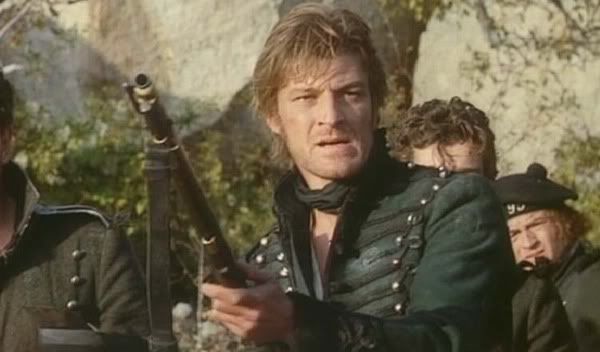
If yer name's Patrick Harper, I suggest you get yer arse over here before I shoot it off you.
Third PERSON:
The road in front of him was long and quiet, with nothing else but his own thoughts to occupy him. Sharpe left Hagman behind in Yorkshire, and though he was glad to have left the town where he was born, he wasn’t glad to leave behind one of the Chosen Men. But Hagman had found a woman he liked. Sally’s a decent woman and they would take good care of each other. Sharpe was headed back to London then Normandy himself, back to Lucille whom he had left on the farm with barely any servants to help her in her work.
He had left Patrick behind as well, but that was a wound that needed more miles before he could prod at it, to find its shape and let it be bled clean.
Sharpe nudged the horse beneath him into a canter. Annoying animals, but he took it because it was a gift from Stanwyck and he would be a fool if he chose to walk to London instead of taking a horse. He wouldn’t be able to buy a horse now if he wanted to, and Sharpe laughed at the thought. He should have killed Rossendale; should have shot him in the head. He should have listened to Lady Anne and not have married Jane. But Jane was so beautiful when he first saw her, and her eyes were red-rimmed when he promised. She needed him- no, she needed a marriage. Perhaps she would have been happier married to that other man -- Sharpe had forgotten his name -- for then she would have been a Lady with all the pretty dresses Sharpe could not afford, going to balls that Sharpe had no interest in, and making small talk about poetry and philosophy that Sharpe didn’t know.
He was a soldier and only that. His hands were callused, new scars from guns and swords laid over the older ones made by the thousands of knots he had to tied in the foundling workhouse. Sharpe had no idea who William Wordsworth was. But he knew how to draw water from a well; how to repair a roof; how to wield a trowel and an axe. Lucille’s farm was a far better place for him, though her neighbours would never stop looking at him strange because he was an Englishman and he was one of those who had murdered their sons, husbands, brothers, uncles, fathers, and friends.
In front of him, an inn loomed. Sharpe turned his head and sniffed under his arm. He did not smell too rank yet, but he suspected that the horse needed to rest anyhow. His hands fumbled slightly at the reins as he urged the horse to turn.
Boney was quiet now, Sharpe thought. He was quiet and England was loud, all the soldiers come back home to a nation who would have rather they all died instead of come back, clamouring for jobs and food and half-pay. If Sharpe believed in God -- if he had before, Teresa’s death had erased any and all belief that remained -- he would send a prayer for Hagman that he would find a job to feed himself and Sally, and any little ones they might have. But Sharpe believed in no such God, and he only urged his horse forward, smiling bitterly.
There was a ship headed for France in a week. He had to reach London by then.
» ADDITIONAL NOTES
If a character is played by a British actor over 40, chances are they might have had a cameo in Sharpe. I’m talking about Daniel Craig (Lieutenant Berry), Mark Strong (Colonel Brand), Alice Krieg (La Marquesa), Liz Hurley (Lady Farthingdale), Paul Bettany (The Prince of Orange), etc, etc, etc. Also, Sharpe is played by Sean Bean. Please just give me facetwins shenainegans, basically.